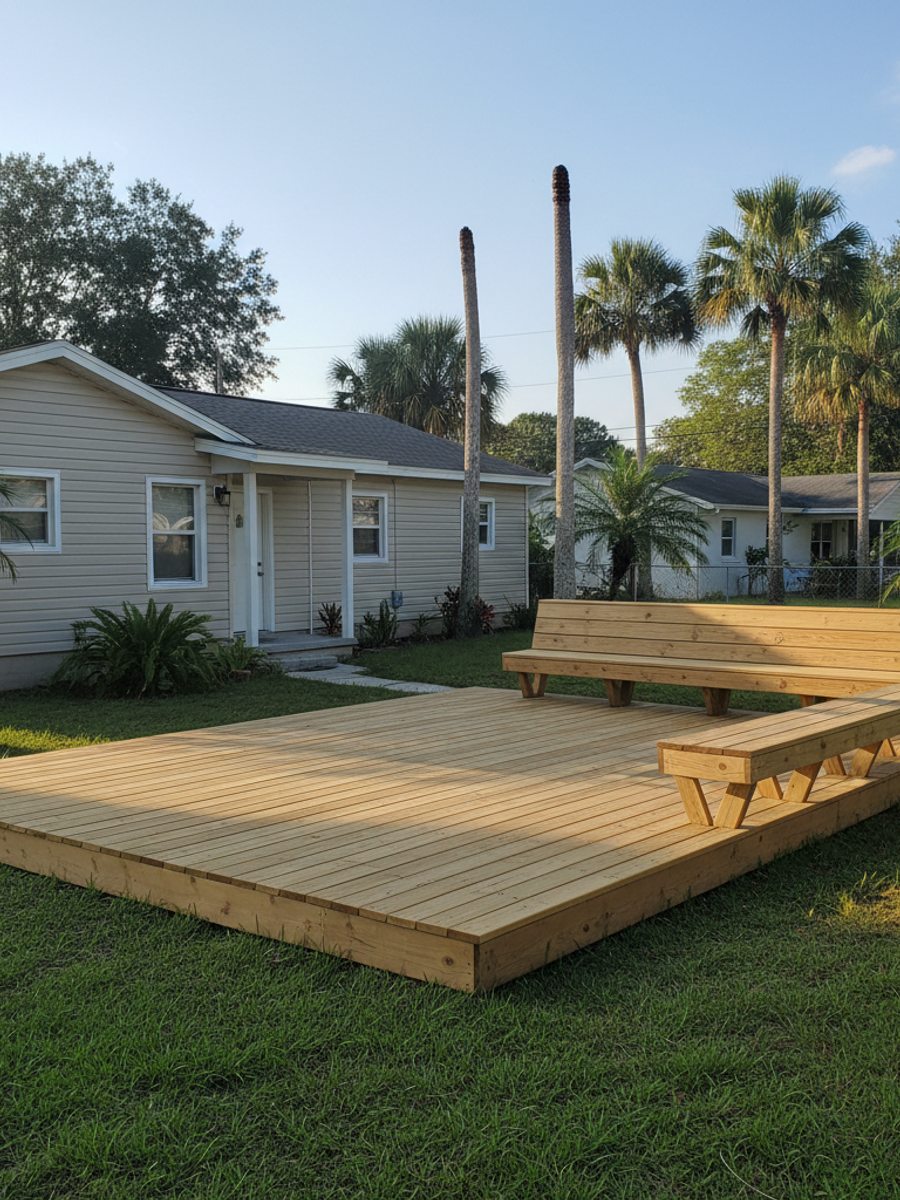
Coral Springs doesn't get frost, so nobody's waiting on the ground to thaw before a deck job can start. That's the easy part. The hard part is everything else South Florida throws at outdoor construction between June and November, and a few things about the ground here that don't show up until you're already digging footings.
The rainy season problem
From roughly June through October, this area gets an afternoon thunderstorm most days. Not a drizzle, a real downpour, often 30 to 45 minutes long, sometimes with lightning that shuts a crew down for safety before the rain even starts. That's fine for a lot of trades. For deck building it causes specific problems.
Concrete footings need time to set before you load them, and pouring concrete into a hole that's actively filling with groundwater or rain runoff weakens the mix. Wood framing that gets rained on repeatedly during construction, before it's sealed, starts absorbing moisture into the end grain, which is exactly where rot starts later. Composite decking installs fine in rain, but staining and sealing a wood deck absolutely does not. Stain needs a dry surface and roughly 24 to 48 hours of no rain afterward to cure properly. Try to seal a deck in July here and you're gambling against a thunderstorm every single afternoon.
Why November through April is the real building season
The dry season here runs late fall into spring. Humidity drops, rain becomes occasional instead of daily, and temperatures sit in the 60s and 70s instead of the mid-90s. This is when footings get poured and cure the way they're supposed to, when lumber stays dry through the framing stage, and when a stain job actually has a clean window to set up.
It's also more comfortable to work in, which matters more than people think. A crew running screws and cutting boards in 95-degree heat with 80% humidity moves slower and takes more breaks than the same crew in February. That affects your timeline whether anyone tells you or not.
Hurricane season isn't just about storms hitting
June 1 through November 30 is hurricane season in Florida, and even in a year with no direct hit, it affects deck scheduling in Coral Springs. Materials get delayed when suppliers pull stock ahead of a forecasted storm. Crews get pulled off new work to help with storm prep or repair for other clients. And if a deck is mid-build when a tropical storm watch goes up, an unsecured frame or partially fastened railing is a real liability, so work stops until it passes.
This is also the reason railing and structural connections here get built to a higher wind load standard than you'd see further north. Broward County requires hardware and fastening rated for high wind exposure, and inspectors check for it. That's not seasonal, that's just how it's built here, but it's worth knowing that a rushed summer job under storm pressure isn't the time to cut corners on it.
What the ground does, regardless of season
Most lots in Coral Springs sit on sandy soil over limestone, with a water table that's high, sometimes just a few feet down depending on the neighborhood. Footings for a deck typically need to go down around 12 inches minimum, sometimes deeper depending on the design and what the local building department requires, and in the wet season that hole can start filling with water before the concrete truck shows up. In the dry season the same hole stays open and workable. That alone is a reason to schedule footing-heavy work, meaning most new deck installs and pool deck construction, for the dry months.
Older neighborhoods, the ones built in the 70s and 80s closer to the center of town, sometimes have decks and additions in the ground already that weren't permitted the way things are done now. If you're doing a repair or resurfacing job on one of those, expect the occasional surprise, an old post footing in the wrong spot or buried debris from the original build.
Permits don't take a season off, but timing still helps
Coral Springs requires a permit for most deck construction, and the review and inspection process runs year-round. A survey or setback check is usually part of it, and if the property is in an HOA, which a lot of Coral Springs communities are, you'll often need HOA approval before the city permit even gets submitted. None of that changes by month. What does change is how fast things move once you're approved. Scheduling framing and footing inspections is easier in the dry season simply because fewer jobs across the county are getting delayed by weather, so inspectors' calendars aren't backed up from storm-related work.
So what should you actually do
If you're building new or replacing a whole structure, aim for a start between November and April if you have any flexibility on timing. If you're staining or resealing an existing deck, dry season is close to mandatory, not just preferred. If you're doing a small repair, a couple of rotted boards or a loose railing, that can happen any time of year because it's fast and doesn't depend on a long open-air cure. And if a hurricane damages a deck, that gets handled whenever it happens, no waiting for a better month.
We plan around all of this at Quantum Deck, and it's worth asking any deck builder in this area how they schedule around rain and hurricane season before you sign a contract, not after.