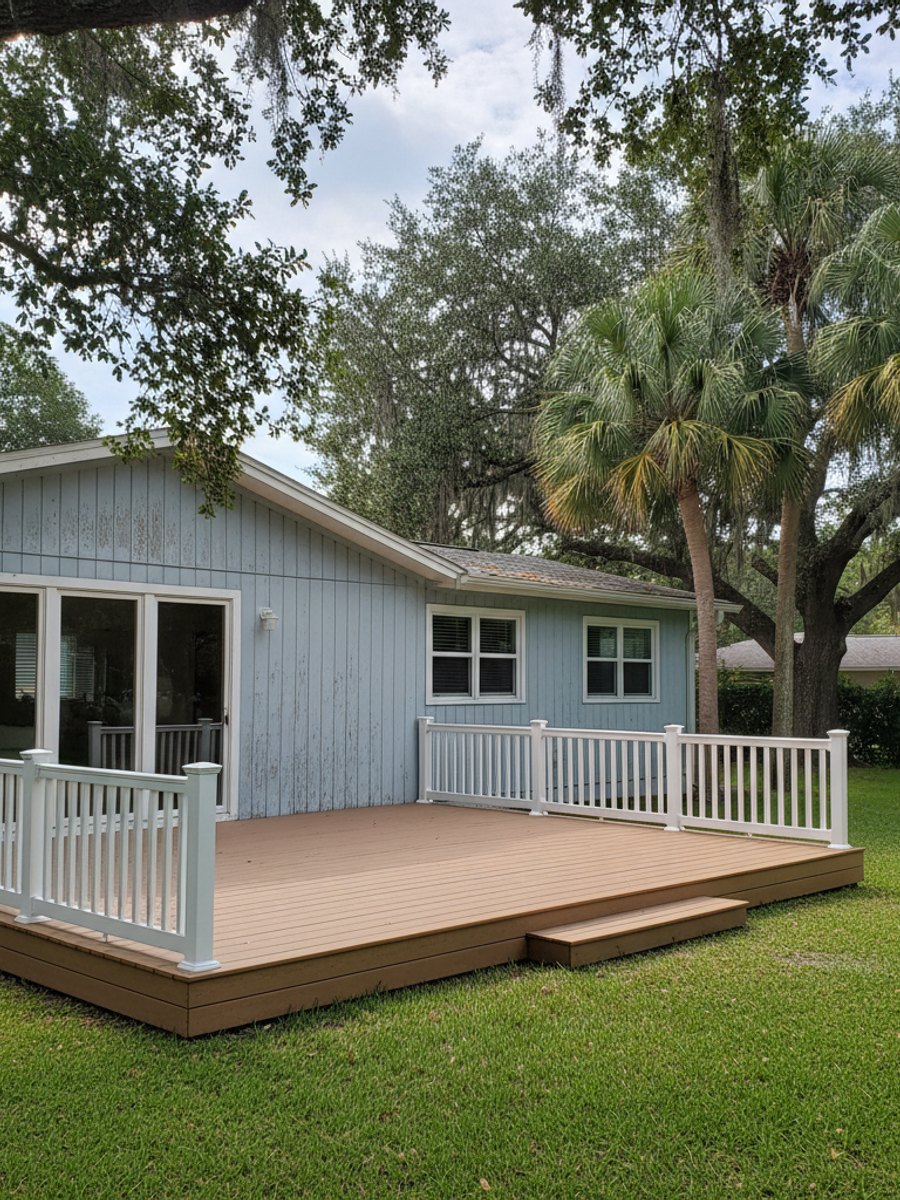
A deck holds people up over a drop, sometimes only 18 inches, sometimes eight feet if it's stepped down toward a pool. That's a different job than repainting a fence, and it's worth treating the hire like it. Most of the trouble homeowners run into here doesn't show up on day one. It shows up eighteen months later when the ledger board starts to sponge, or during a hurricane inspection when the county wants to know who pulled the permit and nobody can say.
Start with the permit, not the price
In Coral Springs, an attached deck almost always needs a building permit, and the city checks it against the Florida Building Code, which in Broward County is stricter than a lot of the country because of wind load. A freestanding deck under a certain height might not need one, but that line moves depending on size and whether it's near a setback, so don't take a contractor's word for it over the phone. Ask directly: who is pulling the permit, and is it under their license or yours? It should be theirs. If a builder suggests skipping the permit to save time or money, that's not a shortcut, that's a house with an unpermitted structure attached to it when you go to sell.
If your lot backs up to a canal or sits close to a property line, a survey may be required before the permit gets approved. A lot of Coral Springs is built out in HOA communities, places like Eagle Trace and Turtle Run, and those associations usually run their own architectural review on top of the city's process. That review can add a couple of weeks. A builder who's worked here before knows to build that time into the schedule instead of promising you a start date they can't hit.
What the contract should actually say
A real proposal names sizes, not just "lumber" or "composite decking." You want to see joist spacing, usually 16 inches on center for most composite boards, tighter at 12 inches if the manufacturer's warranty requires it near stairs or diagonal patterns. You want footing depth and diameter written down, not just "per code." You want to know what the ledger board is bolted through, lag bolts into the rim joist with proper flashing and a self-adhered membrane behind it, not just nailed to the siding. That ledger connection is the single most common failure point on an attached deck, and it's also the easiest thing for a bad contractor to rush.
Ask what fasteners they're using. Standard steel screws corrode fast against ACQ-treated lumber in this humidity. You want stainless steel or hot-dip galvanized hardware, and joist hangers rated for the wind uplift here, not the cheapest box off the shelf. None of this is expensive to ask about. It's expensive to fix once it's under a finished deck.
Signs to walk away from
- A bid that's one number with no line items for footings, framing, decking, and railing separately.
- No mention of a permit at all, or a vague "we'll take care of that."
- Pressure to sign that day for a discount.
- Can't produce a license number or a current certificate of insurance on request. Not a verbal assurance, an actual document.
- Talks you out of a warranty conversation. A real one has an answer for how many years of labor coverage versus what the manufacturer covers on the boards themselves.
None of these by themselves mean a contractor is bad. All of them together usually mean the same thing.
What the ground and the weather here actually do
Coral Springs sits on sandy soil that drains fast, which is good news for footings compared to clay, but parts of the city, especially older sections built up from farmland to the west, have fill soil that isn't as consistent. A footing has to go down to stable bearing soil, not just to a depth on paper. During the wet season, June through September, the water table here can sit close enough to the surface that a post hole fills with water within an hour of digging it. A contractor who's poured footings in this county knows to schedule around that instead of pouring concrete into standing water and hoping.
That same season brings the daily afternoon thunderstorms and the bulk of hurricane season. Wind load isn't theoretical here, it's why the county inspects hardware like hurricane ties and hold-downs on new decks the same way it does on roofs. Heat matters in a different way. By July, dark-colored composite decking can get hot enough underfoot that people avoid it, and pressure-treated pine that gets soaked one day and baked the next will check and cup faster than it would somewhere with a milder summer. A builder who knows the climate will steer you toward board colors and species that actually hold up here instead of just what looks good in the showroom.
License, insurance, and what the warranty is worth
Florida requires a certified or registered contractor license for deck construction of this scope. You can verify a license number yourself through the state's licensing lookup in about two minutes, so there's no reason to take it on faith. Ask for the certificate of insurance directly from the insurer or agent, not a screenshot. On larger jobs, Florida law involves a notice of commencement recorded with the county, which protects you from liens filed by subcontractors or suppliers the builder didn't pay. If nobody brings that up on a job over a few thousand dollars, ask about it yourself.
A warranty is only worth what's written down. Ask how many years cover labor specifically, separate from whatever the composite or hardware manufacturer covers. A contractor who's confident in the work will put that in writing without being asked twice.
None of this is complicated, it just takes asking the right questions before money changes hands. If you're planning a new deck, a rebuild, or a pool deck and want someone who'll walk through the permit and the framing specifics with you up front, that's the kind of conversation we have every day doing our deck builder work around Coral Springs.